
Quick answer
- Up to about 140 sq ft (for example 10×12 or 11×12 ft): 1 ton
- About 140–220 sq ft (for example 12×14 or 14×15 ft): 1.5 ton
- About 220–320 sq ft (for example 15×18 or 16×20 ft): 2 ton
- Top-floor room, west-facing wall or big windows? Go one size up.
Choosing the wrong AC size is the most common mistake we see in Lahore. Buy too small and the AC runs flat out all afternoon without ever cooling the room, which raises your bill and wears out the compressor. Buy too big and you pay more upfront, and a non-inverter model will keep switching on and off, leaving the room cold but damp. This guide shows you how to pick the right size in five minutes.
What “ton” actually means
An AC’s “ton” has nothing to do with weight. It measures how much heat the AC can remove from a room in an hour. 1 ton = 12,000 BTU per hour, so a 1.5-ton AC removes about 18,000 BTU/h and a 2-ton about 24,000 BTU/h. You will see both numbers on spec sheets. Some brands advertise a slightly higher BTU figure for the same tonnage (for example “1.5 ton, 20,500 BTU”), which simply means a bit more cooling headroom.
Step 1: Measure your room
Multiply length by width in feet. A 12×14 ft bedroom is 168 sq ft. If your ceiling is higher than the usual 10 ft, add 10% to the area for every extra foot of height.
Step 2: Read the size table
| Room area | Typical room | Recommended size |
|---|---|---|
| Up to 140 sq ft | Small bedroom, study | 1 ton |
| 140–220 sq ft | Master bedroom, small lounge | 1.5 ton |
| 220–320 sq ft | Drawing room, TV lounge | 2 ton |
| 320–450 sq ft | Large hall, open lounge + dining | 2 ton + one more unit, or a floor-standing AC |
| 450 sq ft and above | Halls, shops, offices | Floor-standing cabinet or ceiling cassette |
These figures assume a normal room on a lower floor with some shade. The next step adjusts for the conditions that matter most in Pakistan.
Step 3: Adjust for heat, sun and people
- Top floor or roof directly above: a roof that bakes in the sun adds a lot of heat. Go one size up (1 ton → 1.5 ton).
- West- or south-facing wall, large windows or glass doors: afternoon sun is the hardest load. Go up half a size, or one size if the glass is large and has no shade.
- More than two people regularly in the room: each person adds heat. For a lounge where the family gathers, size for the larger figure in the table.
- Kitchen next door, or lots of electronics: add some margin.
- Well-insulated room with thick curtains and shade: you can stay at the lower end of the range.
Example: a 12×15 ft (180 sq ft) master bedroom on the top floor with a west wall. The table says 1.5 ton; the top floor and west wall push it to 2 ton. The same room on the ground floor is comfortably served by 1.5 ton.
Is a bigger AC always better?
No. An oversized non-inverter AC cools the air quickly, then switches off before it has removed the moisture, so the room feels cold and clammy, especially during the humid monsoon months. It also costs more to buy. An oversized inverter AC handles this much better, because it slows its compressor down instead of switching off, which is one reason we usually recommend inverters. Still, there is no benefit in paying for capacity you do not need.
Our picks by size
These are popular inverter models from our current range. The cards show today’s price and stock.
1 ton, 1.5 ton and 2 ton inverter ACs
 CandyCandy by Haier 1 Ton DC Inverter AC Model CSU-13HF | Updated 2026Rs 91,999In stock
 HaierHaier HSU-13HFAB 1 Ton T3 Inverter AC – Gray | Energy Efficient DC Inverter Air ConditionerRs 119,999In stock
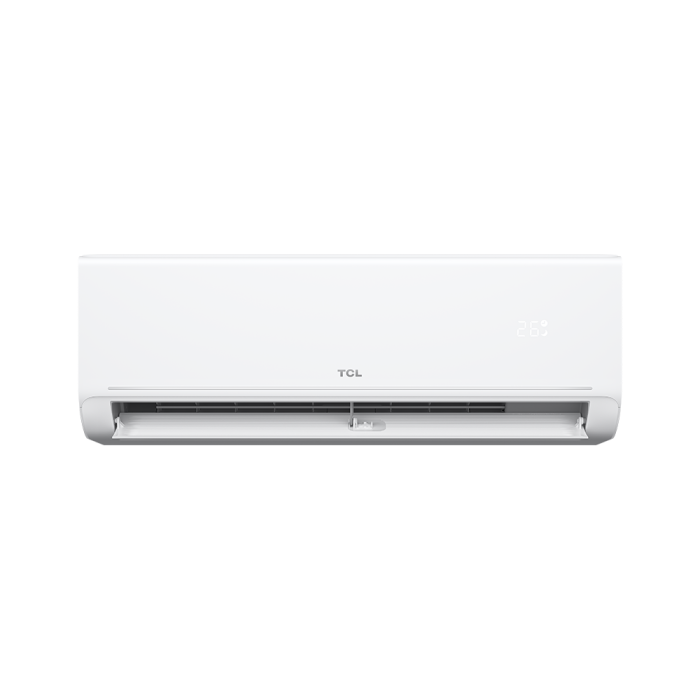
 TCLTCL 1.5 Ton Breeze In WiFi T3 Inverter AC 18T3-PRO-11_Latest ModelRs 159,999In stock
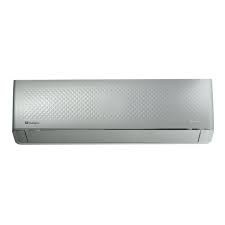 DawlanceDawlance 1.5 Ton Chrome Plus 30 DC Inverter SilverRs 149,999In stock
 MideaMidea MSAGD-24HRFN1 Inverter Extreme 2.0 Ton ACRs 214,500In stock
You can see every model and filter by brand and price in our air conditioner range. For halls and shops, look at floor-standing and cassette ACs.
Three more things to check before you buy
T3 compressor
A “T3” AC is built and tested for hot climates (rated at 46 °C outdoors). In a Lahore June, when it is 45 °C or more outside, a T3 unit keeps cooling where a standard unit struggles. For Punjab and Sindh, we recommend T3.
Voltage range
If your area has low voltage in summer evenings, check the minimum operating voltage on the spec sheet. Many inverter ACs start and run at much lower voltage than older models.
Heat and cool
A heat-and-cool inverter AC can replace a gas or electric heater in winter, and it is often cheaper to run than an oil heater. Worth it if gas is unreliable in your area.
Frequently asked questions
Is 1 ton enough for a 12×12 room?
Yes, 144 sq ft sits at the upper end of the 1-ton range. On a top floor or with afternoon sun, choose 1.5 ton.
Can I use one 2-ton AC instead of two 1-ton ACs?
Only if the space is one open area. A single AC cannot cool two separate rooms through a doorway effectively.
Does a bigger AC use more electricity?
A larger AC draws more power when running hard, but a correctly sized inverter AC uses less over the day than an undersized one that runs flat out for hours. See our guide on inverter vs non-inverter running costs.


